EV Charger Install Failed Inspection — How to Fix It
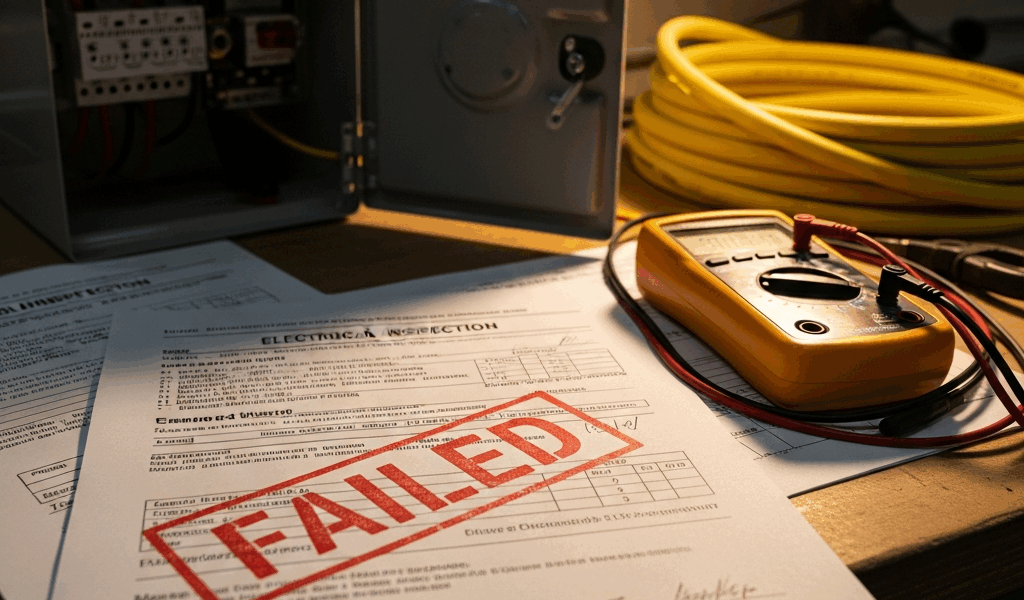
Getting an EV charger installed has gotten complicated with all the conflicting advice flying around. You hire someone, they do the work, you schedule the inspection feeling pretty good about everything — and then the inspector shows up, scribbles “FAILED” across the report, and leaves you standing in your garage wondering what just happened. Red tag on the wall. Car not charging. No clear answer in sight.
As someone who’s watched this exact scenario play out across Washington, Oregon, and Idaho more times than I care to count, I learned everything there is to know about why these inspections fail and what it actually takes to fix them. Today, I will share it all with you.
Why EV Charger Inspections Fail in the First Place
Probably should have opened with this section, honestly. Most failed inspections aren’t catastrophic. They’re not “tear out the walls and start over” situations. They’re specific, repeatable code violations that Pacific Northwest inspectors catch constantly — the same handful of issues, job after job. Here are the six that show up on red-tag reports most often:
- Missing GFCI or AFCI protection — The circuit lacks ground fault or arc fault protection, or it’s wired incorrectly
- Wrong breaker size — A 50-amp charger installed on a 40-amp breaker, or vice versa, creates a serious mismatch
- Undersized wire gauge — 10 AWG wire on a 50-amp circuit instead of the required 6 AWG
- No dedicated circuit — The charger is sharing a circuit with other loads instead of having its own
- Missing disconnect switch within sight of charger — NEC 625.54 requires one, and many installers skip it to save money
- Permit pulled after installation — Work was done first, inspection applied for after; inspectors reject these on principle
Pull out your inspection report right now and scan it against that list. One of those will match. Almost guaranteed.
Wrong Breaker or Wire Gauge — The Most Common Red Tag
Frustrated by an undersized wire job on my own installation, I called my electrician back and made him walk me through the math on my kitchen table. Took maybe 10 minutes. Suddenly the code felt less like arbitrary gatekeeping and more like, well, basic physics.
Here’s the short version: a 40-amp breaker needs 8 AWG copper wire. A 50-amp breaker needs 6 AWG. The difference matters because thicker wire handles higher amperage without heating up inside the wall. Run 8 AWG on a 50-amp circuit and you’ve got wire that can melt before the breaker ever trips. That’s not a technicality. That’s a house fire waiting to happen — which is exactly why the inspector flagged it.
Before re-inspection, have your electrician confirm three specific things:
- Breaker amperage — Match it to your charger’s actual requirements. Most residential Level 2 chargers run 40 or 50 amps
- Wire gauge — Verify the physical copper wire inside the conduit, not just what the paperwork claims
- Circuit dedication — That breaker feeds the charger and nothing else. Zero shared loads
This is where DIY installs fall apart most often. Home Depot sells 10 AWG wire for noticeably less than 6 AWG — we’re talking roughly $0.40 per foot versus $1.20 or more. Someone doing this themselves sees that price difference, grabs the cheaper spool, figures it’ll be fine. It won’t. An inspector will catch it every single time. Don’t make my mistake.
Missing Disconnect or GFCI — What the Code Actually Requires
NEC Section 625.54 is the rule that trips people up most. But what is it, exactly? In essence, it’s a requirement that a means of disconnection must be installed within sight of your EV charger. But it’s much more than that — because “within sight” gets interpreted differently depending on which jurisdiction you’re in.
Parts of Washington state will accept the charger’s own built-in disconnect button. Portland-area and Boise inspectors, though? They often want a separate, dedicated disconnect switch — mounted within arm’s reach, clearly visible, nothing blocking access to it. Same code language, different enforcement. That’s what makes NEC interpretation so maddening to us homeowners trying to just do this right.
Before your re-inspection, call the local authority having jurisdiction — your city or county building department — and ask directly: “Does a built-in charger disconnect satisfy 625.54, or does a separate switch need to be installed?” Get that answer in writing. Email counts. A quick follow-up message saying “just to confirm what we discussed” covers you.
GFCI requirements are less ambiguous. Every EV charger circuit needs ground fault protection — full stop. Some chargers have it built in. Most don’t. If yours doesn’t, a GFCI breaker installed in the panel satisfies the requirement cleanly. Don’t wire a GFCI outlet into the line and assume that covers it. Inspectors want to see panel-level protection, and a wall outlet GFCI won’t cut it.
How to Request a Re-Inspection and What to Bring
Call your building department the day after you receive the failed report. Not next week. The inspection is still fresh in their system, scheduling moves faster, and frankly you look like someone who takes this seriously — which inspectors notice.
Here’s what to have ready when you call:
- Your original permit number and the failed inspection report itself
- Photos documenting the corrected work — new wire gauge, new breaker, new disconnect switch, whatever was flagged
- A signed statement from your licensed electrician confirming all corrections meet NEC requirements
- Payment ready for the re-inspection fee — typically $75 to $150 in Washington and Oregon, though some counties run higher
Some jurisdictions in the Portland metro area offer photo re-inspections for minor corrections. If your fix was a labeling issue, a conduit support problem, or a disconnect switch installation, ask whether photos are acceptable before you schedule an in-person visit. That question alone can save you a week or two of waiting.
Plan on 5 to 10 business days for the re-inspection slot. If the inspector has to return to your site physically, add a few more days onto that. Build the buffer into your expectations now.
When to Call Your Electrician Back vs. Handle It Yourself
Here’s the honest boundary — and I mean honest, not the liability-hedged version. Anything involving your breaker panel, your main service entrance, or wire running inside conduit requires a licensed electrician. Washington, Oregon, and Idaho all require permitted work performed by someone holding a valid electrical license. Touch the panel yourself after a failed inspection and the re-inspection fails again automatically. You’ve now paid twice and fixed nothing.
What you can legitimately handle yourself:
- Labeling — Clear, permanent labels on the breaker and at the charger location. A Brother P-Touch label maker runs about $30 and inspectors love clean labeling
- Clearance issues — Moving storage, boxes, or equipment away from the charger if that was flagged
- Conduit securing — Adding conduit straps if the pipe was flagged as unsupported. Straps cost almost nothing at any electrical supply house
- Mounting a disconnect box — If it’s a pre-made disconnect enclosure and your electrician already ran the wiring, physically mounting the box on the wall is within reach for a confident DIYer
Everything else goes back to your electrician. Yes, that costs money. A second failed inspection costs more — in re-inspection fees, replacement materials, and days you spend not charging your car.
I’m apparently someone who learned this the hard way, and hiring a licensed electrician works for me while the DIY approach never quite does. One more thing worth knowing: your homeowner’s insurance may exclude coverage for damage tied to unpermitted electrical work. Your charger warranty could be void if the install wasn’t code-compliant. And somewhere down the road, whoever buys your house will have their own inspector crawl through everything.
Get it right. Schedule the re-inspection, bring your electrician back for whatever needs licensed hands, and pass on the second attempt. So, without further ado, make that call today.


Stay in the loop
Get the latest northwestevcharge.com updates delivered to your inbox.