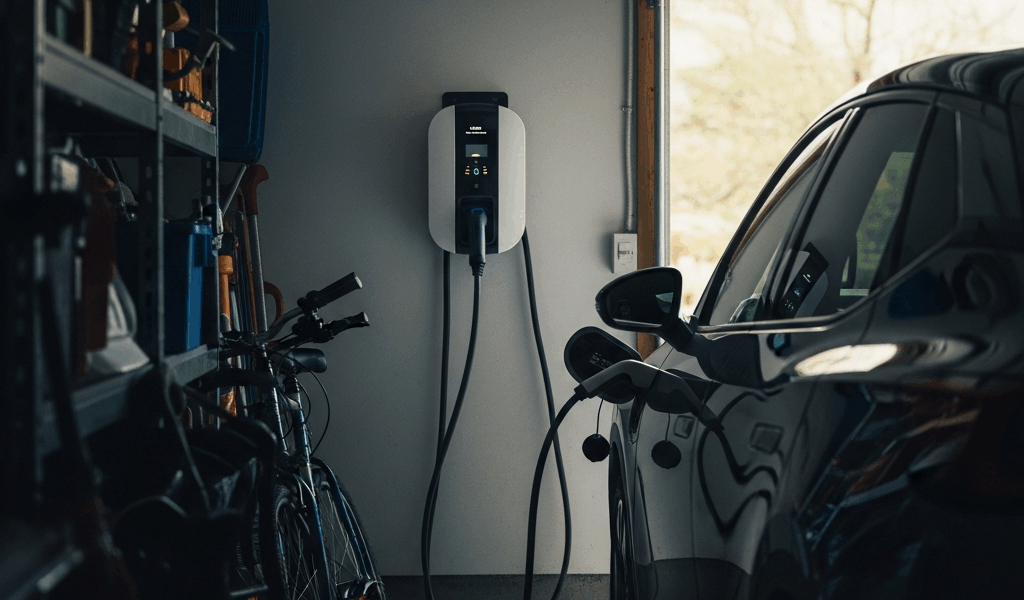
A Level 2 EV charger outputs between 3.3 kW and 19.2 kW depending on the amp rating. Most home Level 2 chargers run at 7.6 kW (32 amps) or 11.5 kW (48 amps). But the number on the charger is only half the equation — your car’s onboard charger determines what you actually get.
Level 2 Charger kW Output by Amp Rating
The calculation is straightforward: charger amps multiplied by 240 volts, divided by 1,000. A 32-amp charger delivers 7.6 kW. A 48-amp charger delivers 11.5 kW. Here is the full range:
16A = 3.8 kW. 24A = 5.7 kW. 32A = 7.6 kW. 40A = 9.6 kW. 48A = 11.5 kW. 80A = 19.2 kW.
Most residential Level 2 chargers sold today are 32A or 48A. The 32A units are cheaper and work on a 40-amp breaker. The 48A units require a 60-amp breaker but charge roughly 50% faster. Both plug into a NEMA 14-50 outlet or hardwire to a dedicated 240V circuit.
Your Car’s Onboard Charger Limits What You Actually Get
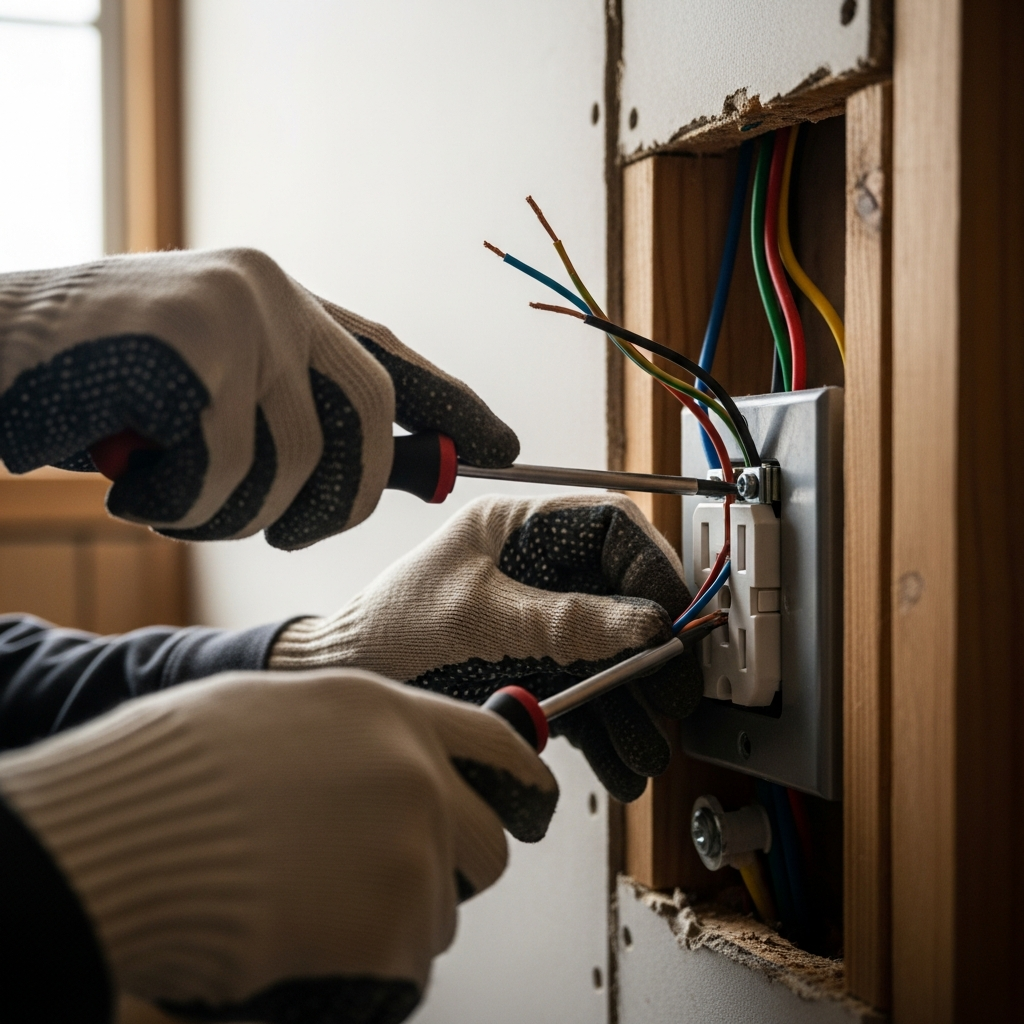
This is the concept that trips up most new EV owners. The charger on the wall and the charger inside your car are two different things. The wall unit delivers power. The car’s onboard charger accepts power. Your actual charging speed is determined by whichever number is lower.
A 48A wall charger (11.5 kW) connected to a Chevy Bolt EV with a 7.2 kW onboard charger will charge at 7.2 kW. The extra capacity of the wall charger is unused. You paid for 11.5 kW of delivery but your car only accepts 7.2 kW.
Common onboard charger limits: Tesla Model 3 and Model Y accept 11.5 kW. Chevy Bolt EV accepts 7.2 kW. Nissan LEAF accepts 6.6 kW. Ford F-150 Lightning accepts up to 19.2 kW with the dual onboard charger option.
How Long to Charge at Level 2 by Vehicle
These numbers assume charging from 20% to full at each vehicle’s maximum Level 2 acceptance rate.
Tesla Model 3 Long Range (82 kWh battery, 11.5 kW onboard charger): approximately 8 hours. Chevy Bolt EV (66 kWh, 7.2 kW onboard charger): approximately 10 hours. Nissan LEAF Plus (62 kWh, 6.6 kW onboard charger): approximately 11 hours. Ford F-150 Lightning (131 kWh, up to 19.2 kW onboard charger): approximately 10 hours with the correct charger and circuit.
Real-world Level 2 charging adds approximately 20 to 30 miles of range per hour for most mainstream EVs. Plug in when you get home, wake up to a full battery. That covers 95% of daily driving patterns without thinking about charging infrastructure.
Do You Need a 32A, 40A, or 48A Charger?
32A (7.6 kW): Sufficient for most drivers charging one EV overnight. Adds 20 to 25 miles per hour. Fully charges most EVs in 8 to 12 hours overnight. Works on a 40-amp breaker, which fits most existing panels without upgrades.
40A (9.6 kW): For drivers who need faster top-up because they can only charge 3 to 4 hours on some nights. Higher throughput on a 50-amp breaker.
48A (11.5 kW): For high-usage drivers, F-150 Lightning owners, or households with two EVs sharing one circuit. Worth noting: a 48A circuit costs roughly the same to install as a 32A circuit — the wire gauge and breaker are slightly larger but the labor is identical. Future-proofing with 48A capacity makes sense even if your current car only accepts 7.2 kW.
Level 1 vs Level 2 vs DC Fast Charging
Level 1 runs on a standard 120V household outlet: 1.2 to 1.8 kW, adds 4 to 6 miles per hour. Fine for plug-in hybrids or drivers who cover fewer than 30 miles daily.
Level 2 runs on 240V: 3.3 to 19.2 kW, adds 12 to 50 miles per hour depending on the charger and vehicle. This is the practical choice for all battery-electric vehicle owners who drive more than 30 miles a day.
DC Fast Charging is public-only infrastructure: 50 to 350 kW, adds 150 to 600 miles per hour. For road trips and emergency top-ups, not daily home use.
For home charging, Level 2 is the answer for virtually every EV owner. The only exception is the occasional driver who never depletes below 80% and has 12 or more hours to charge overnight — Level 1 works for that very specific use case.




Stay in the loop
Get the latest northwestevcharge.com updates delivered to your inbox.