Why Your Charger Looks Ready But Does Absolutely Nothing
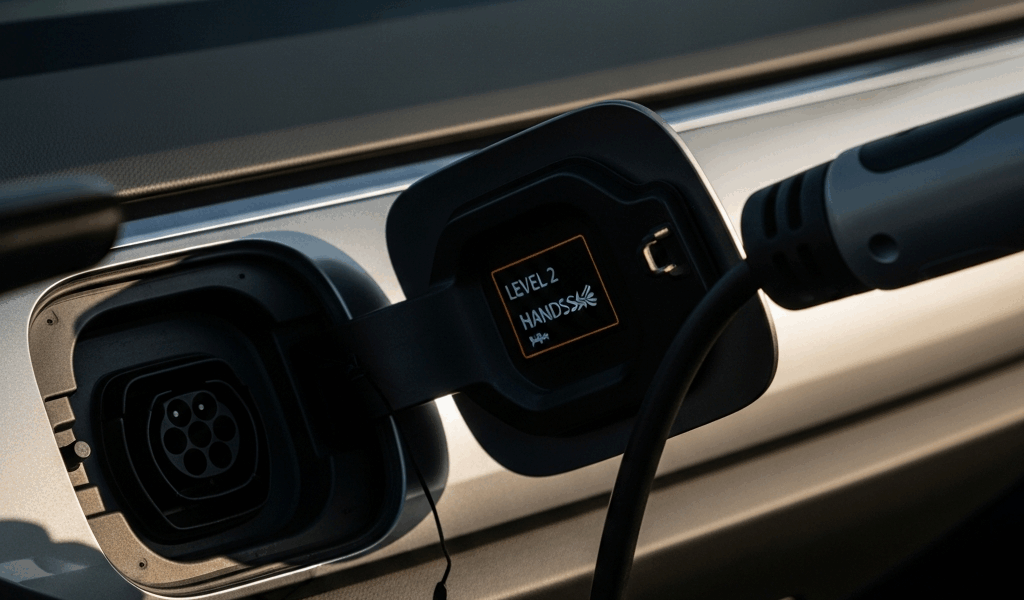
Home EV charging has gotten complicated with all the misinformation flying around. I installed a Level 2 charger in my garage last spring — a ChargePoint Home Flex, 48-amp unit, professionally wired — and the first time my wife tried charging her Hyundai Ioniq 6, the wall unit showed a solid green light. Everything looked perfect. The car’s screen said “ready.” But nothing happened. For three hours, not a single electron moved.
What I didn’t understand then was the handshake. But what is a handshake? In essence, it’s an actual back-and-forth conversation happening between the charger and your vehicle. But it’s much more than that. Your EV charger — technically called an EVSE, or Electric Vehicle Supply Equipment — doesn’t just push power into your car on command. It sends a low-voltage pilot signal through the J1772 connector: “I’m here, I’m safe, here’s how much power I can offer.” The vehicle listens and decides whether to accept. A green light means the charger detected the car and sent that signal. It does not mean charging started. Proximity detection, ground continuity, thermal monitoring — dozens of invisible checks happen before that first amp flows. That gap between “charger ready” and “car actually accepting charge” is where almost all troubleshooting begins.
Check These Five Things Before Calling Anyone
- Verify the charge port latch on the vehicle side. Open your car’s door and look directly at the charge port — usually sitting on the rear quarter panel or driver’s side. On some vehicles the port door opens and closes physically. On others it’s a simple receptacle. Make sure the connector is fully inserted, all the way in. If anything feels loose, pull it out completely and try again with firm, steady pressure until you hear or feel a distinct click. A partially seated connector breaks the circuit entirely — even when the charger is convinced it’s connected. Don’t make my mistake of assuming “close enough” counts here.
- Check the garage breaker panel for a tripped GFCI or main breaker. Walk to your electrical panel. The breaker dedicated to the charger circuit should be sitting in the ON position. GFCI breakers — common in garages and anywhere near water — trip silently sometimes. The toggle will be sitting awkwardly between ON and OFF rather than snapping cleanly to either side. Flip it fully to OFF first, then back to ON. If it trips again immediately, you’ve got a ground fault. That needs a licensed electrician. But most of the time it just needs a reset. I found a tripped GFCI breaker in my own panel about two weeks post-installation. No alarm, no alert, the charger looked completely fine. The car had never charged once.
- Cancel any scheduled charging delay active in your vehicle’s app or settings. Most modern EVs let you set charge windows for off-peak hours or delayed starts. Open your car’s infotainment screen or mobile app and find “Charging Settings” or “Charge Schedule.” If there’s a future time or date sitting in that field, delete it. Some vehicles flat-out refuse to begin a session until the scheduled window opens — and this setting survives unplugging and replugging without blinking. Two minutes to verify. Worth it every time.
- Look for moisture around the charger that might have triggered a ground fault. Pacific Northwest garages are wet. Frustratingly wet. I learned this firsthand when Seattle drizzle found its way into the connector seal during a soggy October — the charger’s internal sensors detected a ground fault and shut down charging entirely, but kept showing a green ready light because the hardware itself wasn’t damaged. Dry the connector and port thoroughly with a clean cloth. If it’s been wet for hours, wait a full 30 minutes after drying before testing again. The charger needs time to confirm the fault has cleared.
- Confirm the amperage setting on your vehicle matches what the charger can actually deliver. Some EVs let you throttle charging speed directly from the dashboard or app. If your charger is wired for 32 amps but your car’s onboard charger menu is capped at 16, the car will only draw 16 — fine, no problem there. More dangerous is the opposite: the vehicle requesting more than the charger is wired to handle. Go into your car’s settings and find “Max Charge Current” or “Charging Rate.” Start at 16 amps. Always. That’s safe on virtually any installation. Confirm charging works at all before bumping it up.
Tesla Versus Non-Tesla Chargers Behaving Differently
Tesla vehicles use a proprietary connector. Third-party Level 2 chargers ship with a J1772 standard connector, so Tesla owners need an adapter — a small rectangular module that locks onto the J1772 plug. That’s what makes this setup endearing to us EV owners: it mostly just works. Until it doesn’t. I watched an electrician spend 40 minutes diagnosing a non-charging Tesla Model Y before realizing the adapter was angled slightly and not making full contact. The Tesla’s screen read “Connection Error.” The charger showed green the entire time. He reseated the adapter with one firm push. Done.
Non-Tesla vehicles run into the opposite problem sometimes. Certain aftermarket chargers don’t send a pilot signal immediately on plug-in — they wait for the car to request power first. Older Nissan Leafs and Chevy Volts, particularly 2015 through 2018 model years, expect the charger to announce itself right away. If the charger waits and the car waits, you get nothing. Watch your dash display when you plug in. Does it show “Charging,” a charging icon, or an error code within 10 seconds? If you see an error code, photograph it immediately and search the model-year-specific owner forum with that exact code. Tesla owners should check the app under “Car Status” — it will say “Charging” clearly or name the specific fault, like “Adapter Not Detected.”
When the Installer Needs to Come Back
Probably should have opened with this section, honestly. Some failures are yours to fix at home. Others require a licensed electrician — full stop.
Stop and call a pro if the charger frequently trips a GFCI or main breaker, if the pilot signal is intermittent (charger cycling between red and green), or if your vehicle displays error codes referencing “Ground Fault” or “High Temperature.” These point to wiring problems, misconfigured circuits, or genuine safety issues. You cannot jury-rig any of them.
Neutral wire faults are specific to hardwired chargers connected directly to your home’s service panel. If the installer ran 240V but didn’t establish proper neutral bonding, certain EVSEs simply won’t initiate a session at all. Firmware bugs in the charger unit itself also happen — I’m apparently unlucky enough to have experienced one personally, and my ChargePoint unit required a manufacturer-pushed update before it would handshake reliably. These bugs showed up disproportionately in units shipped between 2019 and 2021. If your charger has never worked once, and you’ve cycled through all five checks above, the unit may need replacement or a firmware update that only the manufacturer or original installer can deploy.
Wire undersizing causes a subtle, maddening failure. The charger detects that its requested amperage would overload the circuit, throttles to zero amps, and goes silent. The breaker doesn’t trip because no dangerous current is actually flowing. Nothing charges. A licensed electrician can confirm wire gauge — typically 6 AWG for a 50-amp circuit — and correct it if needed. In the Northwest, many installers carry manufacturer warranties that only apply when a licensed professional services the unit, so contact the original installer before anyone else.
How to Prevent This From Happening Again
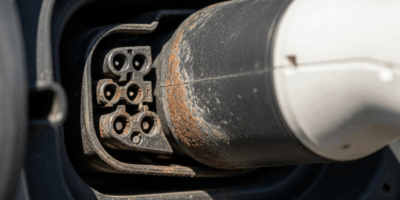
Keep the connector and charge port clean and dry. That’s it. Water and dirt block the contacts faster than anything else. Use the rubber dust cap that came with your charger — it’s not decorative. And don’t use extension cords or daisy-chained adapters rated below 40 amps continuous load. They get hot. They fail silently. Don’t make my mistake.
Enable charge session notifications in your vehicle’s app. My Ioniq 6 sends a push notification when charging starts and again when it stops. The first failed session I caught at 9 p.m. instead of discovering at 7 a.m. the next morning — that notification saved me hours of troubleshooting and one very inconvenient commute.
For Pacific Northwest residents, your local utility’s EV rebate program — PSE, Seattle City Light, PGE — can connect you to a vetted electrician if problems keep returning. Most offer free consultations through the rebate process. Use them.


Stay in the loop
Get the latest northwestevcharge.com updates delivered to your inbox.