Why EV Charger Installs Take Longer Than Quoted
EV charger installation timelines have gotten complicated with all the misinformation flying around. As someone who’s watched dozens of these projects drag out across the Pacific Northwest, I learned everything there is to know about why that two-week quote turns into week five — with your car still charging at the public station downtown. Today, I will share it all with you.
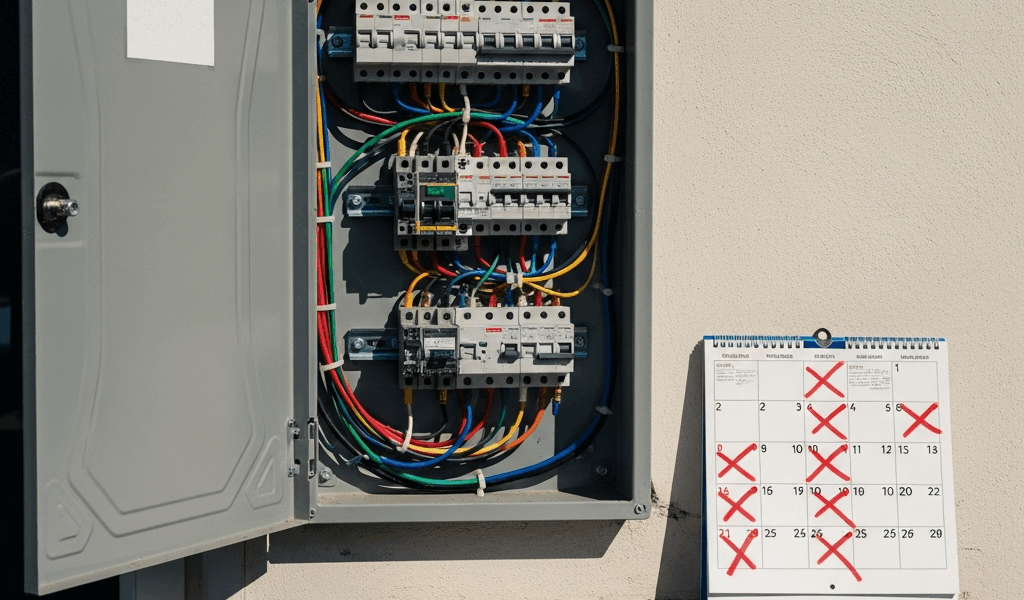
Here’s the part nobody wants to hear. A clean Level 2 charger install — no panel work, no surprises — genuinely wraps up in 1–2 weeks. Fine. Great. But the moment your electrician pops open that panel and spots a 100-amp service that can’t support your new charger, you’re suddenly looking at 6–8 weeks. Sometimes more. That’s not the contractor sandbagging. That’s the system.
Three things stall nearly every delayed install: permit processing, panel upgrades, utility coordination. Miss any one of them, and your contractor sits idle — waiting on external parties who operate on their own schedule entirely.
I watched this play out firsthand. A friend had a Tesla Wall Connector installed back in 2021, right when supply chain chaos peaked. The install dragged to nearly ten weeks. The electrician wasn’t slow. Seattle had a three-week permit backlog, the utility required an inspection because the panel work triggered their interconnection rules, and then the panel components took another two weeks to source. Everything had to line up perfectly — and it didn’t, not for a long time.
Permit Delays and How Long They Actually Take
Electrical work on your home requires a permit. Non-negotiable. But what is a permit delay, really? In essence, it’s government processing time stacked against your personal deadline. But it’s much more than that — it’s also resubmission risk, queue dynamics, and seasonal backlogs that your contractor probably didn’t factor into the original quote.
Seattle’s online portal has improved things considerably. Still, expect 5–10 business days for initial review when the application is clean. Spokane moves faster — 3–7 days, usually. Portland runs 7–14 days. Eugene lands around 5–10 days. Boise sits somewhere in the 7–12 day range.
Those numbers assume a perfect first submission. One wrong calculation, one missing document, one unclear drawing — and the application goes back in queue. That’s another 5–10 days from scratch. I’ve seen two resubmissions add three weeks to a project that should have been routine.
Spring and early summer are brutal for permit queues. Everyone installs chargers when the weather turns. Winter is genuinely faster — worth knowing if you’re still in the planning phase.
Here’s what to actually do. Ask your contractor for the permit confirmation number the day they submit. Not a week later. That day. With the number, you can check status directly on your city’s portal — Seattle’s shows real-time updates, Portland’s does too, Spokane’s is clunkier but searchable. When you call or email, say this exactly: “I’m following up on permit number [X]. Can you tell me the current status and what’s needed to move it forward?” That phrasing gets answers without putting anyone on the defensive.
Two weeks with zero movement? Make the call. Applications get buried. Reviewers forget to flag questions. A single phone call unsticks things more often than you’d expect.
Panel Upgrades Are the Biggest Wildcard
Probably should have opened with this section, honestly. Panel upgrades are where timelines genuinely explode — and no electrician on earth can warn you about yours without physically opening your service panel first.
Here’s the scenario. Your house was built in 1998. You’ve got 100-amp service. Your Level 2 charger wants 40–48 amps dedicated. Your water heater pulls 20 amps. Your AC pulls 30. The math doesn’t work — not even close. You need a 200-amp upgrade, and that upgrade comes with its own entire timeline baked in.
- New panel ordered — 1–2 weeks for parts in the Northwest, sometimes longer depending on the specific model
- Scheduling the electrician — 2–4 weeks out, minimum in spring
- The actual panel swap — a full day, occasionally two
- City electrical inspection — typically 3–5 business days
- Utility inspection if the panel work touches the service entrance — this is the hidden delay, adding 1–3 weeks on the utility’s schedule, not yours
That’s 6–8 weeks minimum. I’ve personally seen it hit 10 weeks when a Square D QO200L200PG panel was backordered and the utility’s queue had swelled from a storm response backlog the month prior.
The worst part isn’t the wait. It’s that your electrician can’t commit to a firm appointment date until the panel physically arrives. They’re not stalling. They’re genuinely waiting on parts and managing a booked-out schedule simultaneously.
Utility Coordination and Meter Work Delays
After electrical work clears inspection, the utility enters the picture. That’s what makes this stage endearing to us homeowners — it feels like the finish line, right up until it isn’t.
No panel upgrade, no service capacity issues? Puget Sound Energy, Pacific Power, and Portland General Electric typically don’t need to send anyone out. Charger installs, final inspection passes, you’re done. Clean and simple.
But panel work happened? Meter socket needs moving? Service entrance needs modification? Now you’ve got a utility service request — and this is where installs truly stall.
Puget Sound Energy’s queue for meter and service work runs 2–4 weeks off-season. In spring and summer, that stretches to 4–6 weeks. Pacific Power runs similar timelines, sometimes longer in rural service areas. Portland General Electric moves a bit faster in Portland proper, though their broader service territory can still mean weeks of waiting.
During this period, your electrician cannot finish. Full stop. They’re waiting. You’re waiting. The utility shows up when they show up.
Calling the utility repeatedly doesn’t accelerate anything — I’ve tested this theory and can confirm it only raises your blood pressure. What actually helps is asking your contractor for the utility ticket number so you can track progress yourself without burning goodwill on either end.
What to Do If Your Install Is Stalled Right Now
So, without further ado, let’s dive into the part that actually matters when you’re in week five of a two-week project.
First — don’t panic. Stalled is not the same as failed.
Send your contractor a short email. Keep it factual, not frustrated. Something like: “My install was quoted complete by [date]. We’re now at [current date]. Can you give me a status update — specifically, are we waiting on permits, utility work, parts, or scheduling?” That’s it. That email gets answers.
If the answer is “utility is still working on it,” ask for the ticket number. If it’s “permit is in review,” get the permit number and offer to contact the city yourself to check status. Most contractors are relieved when a homeowner volunteers to make that call — it takes one task off their plate.
Don’t make my mistake — I once waited three weeks assuming silence meant progress. It didn’t. The permit had a flagged question that nobody mentioned. One email would have caught it in week one.
I’m apparently the type who checks permit portals at 11pm, and that habit works for me while passive waiting never does. Your mileage may vary. But if your contractor genuinely cannot give you a straight answer about the status — not a vague answer, an actual no-information response — that’s worth escalating. Your state licensing board or the Better Business Bureau are both appropriate next steps for truly unresponsive contractors.
Most delays, though, aren’t contractor failures. They’re system delays. Permits move at government speed. Utilities run their own schedules. Parts arrive when they arrive. Knowing which specific bottleneck is yours — and having realistic numbers to measure against — turns five weeks of frustration into five weeks of informed waiting. Not fun. But different.
Your install will finish. It just might not look anything like the original timeline suggested.



Stay in the loop
Get the latest northwestevcharge.com updates delivered to your inbox.